Black in Ukraine: Why I Stopped Sharing My Travel Stories
I was teaching at Hampton, and the semester had stretched itself thin, the way certain seasons do, long past the point of growth, into pure endurance. I was tired in the particular way one becomes tired when the work is meaningful, when you give more than you knew you had, and still the days keep asking for more.
And yet, there was a kind of power in that tiredness.
There is something almost dangerous, almost holy, about being surrounded by Black people every day. About walking into rooms filled with young Black students who do not yet know the full weight of what the world will ask them to carry. Hampton University my alma mater, offered me a rare permission. A rare atmosphere. A rare concentration of possibility.
As a Black person, you are not often granted the experience of living in a world where your Blackness is not an explanation, not a threat, not a problem to be solved. You are not often allowed to exist inside an institution where nearly everyone, faculty, staff, students, looks like you, talks like you, or at least understands something about your interior weather without needing you to translate it.
It is, in some strange sense, like a small nation. A mini Africa, some might say, not because it is untouched by America’s cruelty, but because it briefly interrupts that cruelty.
It reminds you what it might feel like to build something with your own people and not constantly brace yourself for injury.
And perhaps that belief, more than rest, was what I needed most.
So instead of taking the vacation people are supposed to take, some beach, some hotel, some soft place where exhaustion can pretend it never happened, I chose something else.
I chose Ukraine. I chose to volunteer to teach English.
People think traveling is escape. They think it is luxury. They think it is photographs. But I have found that travel, when taken seriously, is confrontation.
I had studied abroad at nineteen through Hampton and the University of Virginia, and somehow, improbably, I stayed in contact with some of the exchange students from that long-ago time, proof that the world is not as wide as it pretends to be, and that certain connections refuse to die simply because time has moved on.
When I decided to go, Ukraine was not the Ukraine that filled headlines. Not yet. The war was there, but it was concentrated, like an ache people learn to ignore, Crimea, they said, and the country carried it the way nations carry wounds: quietly, proudly, and with a deep fatigue that never makes it into brochures.
The Man From Elsewhere
I traveled to a small village in Kryvyi Rih, eight hours by train from Kyiv, and I do not exaggerate when I say I may have been the only African American many of them had ever seen in the flesh. I arrived not as a tourist, not even as a teacher, but as an impossibility. I was looked at the way people look at something they have only imagined. Like I had stepped out of a television. Like I had been dropped from the moon.
I taught English to middle and high school students, day after day, in rooms that smelled like chalk and winter and discipline. I stayed with a host family, which is the only way, I believe, to truly see a country. Not through museums or monuments, not through curated streets meant to flatter the outsider, but through breakfast tables and silence, through the ordinary rhythms of people trying to live.
It isn’t glamorous. It isn’t Instagram. It is life.
This family had two sons. The mother was a civil engineer. The father worked in a local factory. They weren’t performing hospitality, they were surviving, and in their survival they revealed things to me that no guidebook ever could: the tenderness inside austerity, the pride inside limitation, the way people laugh even when history is heavy on their backs.
When Violence Becomes Geography
On the weekend I left Kryvyi Rih and went to Kyiv. The program administrator walked me through the city and showed me Maidan Nezalezhnosti, the square where students had once stood demanding dignity, and where many had been executed for the crime of wanting their country to belong to them.
There is something obscene about how quickly violence becomes geography.
You can stand on a street corner where blood once pooled, where voices once rose and were cut down, and still hear traffic. Still see lovers walking. Still see children playing. History is not always loud. Sometimes it is simply present, like a ghost that refuses to leave the room.
From Kyiv I went to Lviv, where my friend, someone I had met nearly a decade earlier, showed me her city as though she were offering me a piece of herself. And I realized again what I have learned over and over in every country I’ve touched:
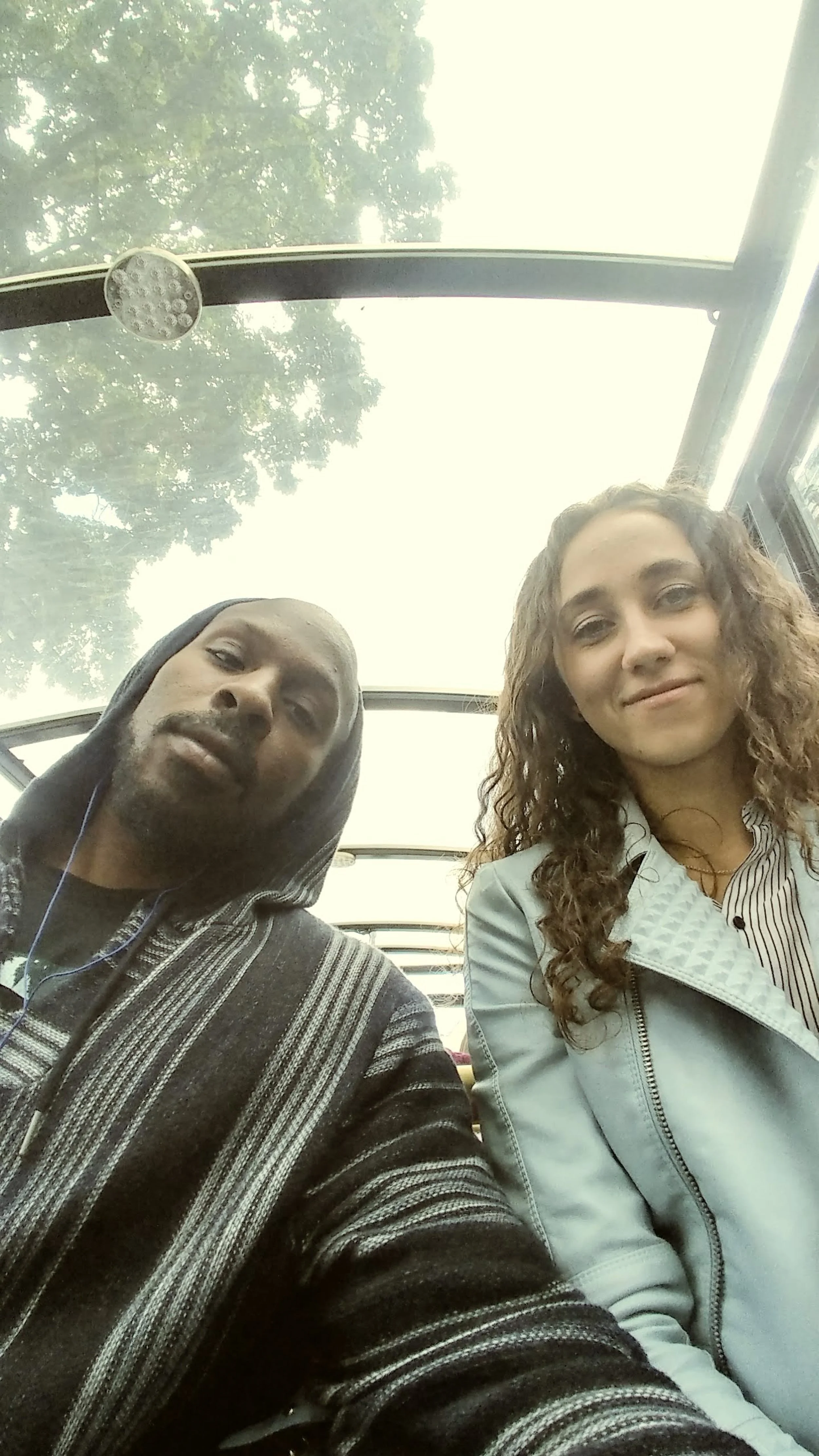
The greatest thing travel gives you is not the photographs. It is the people. It is the conversations. It is the gradual, irreversible undoing of whatever small story you once believed was the whole world.
Over time, those conversations reshaped me. Not in the dramatic way people like to announce transformation, but in the quiet way that truth works, slowly. Relentlessly. Like water on stone.
And yet, when I returned home, I found myself speaking less and less about it.
Not because I had nothing to say. But because I began to understand something else: that many people, even the ones who claim to love you, need your life to fit inside the size of their own imagination. They do not know what to do with a Black man who moves too freely, who refuses to remain inside the borders they have drawn for him.
So they build a box, neat, reasonable, perfectly sized, and they place your experience inside it, not to honor you, but to make you easier to understand. To make you safer. To make themselves comfortable.
And when you feel that happening enough times, when you recognize the quiet labor of being translated into something digestible, you begin to protect your life by withholding it.
So now, sometimes, I don’t share anything at all.
Not because I am empty. But because what I have lived is too expansive to be reduced. Too complicated to be domesticated. Too sacred to be handled carelessly.
And because, finally, I have learned that not everyone deserves access to the parts of you the world had no right to create.